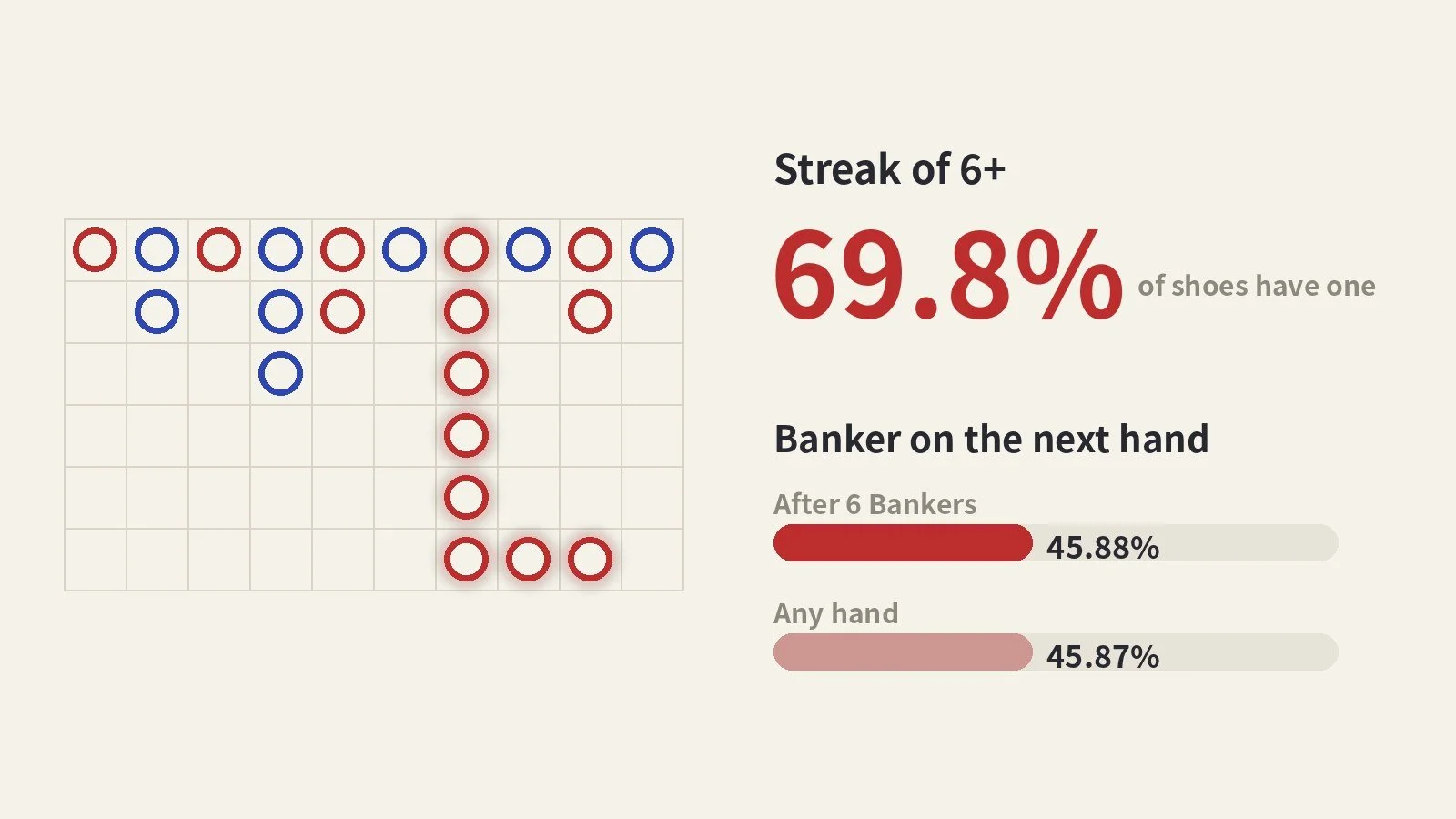
My parents rode long streaks. I waited for the sixth hand and started a Martingale against them. Two million simulated shoes later, here's what the math says about both of us.
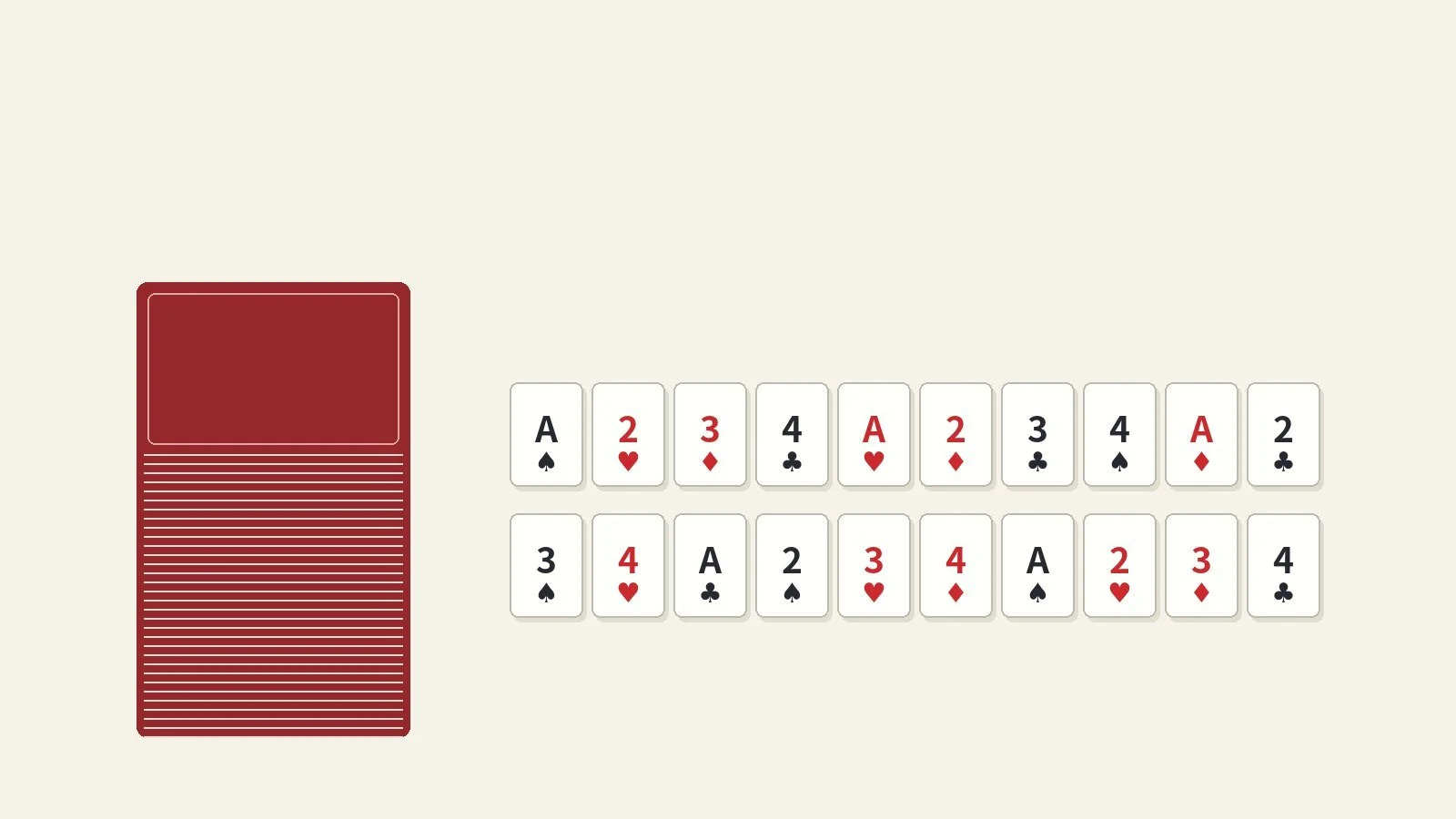
Yes, you can count cards in baccarat, and the cards left in the shoe really do change the odds. Here's how much, calculated card by card, and why it's usually less than you'd think.
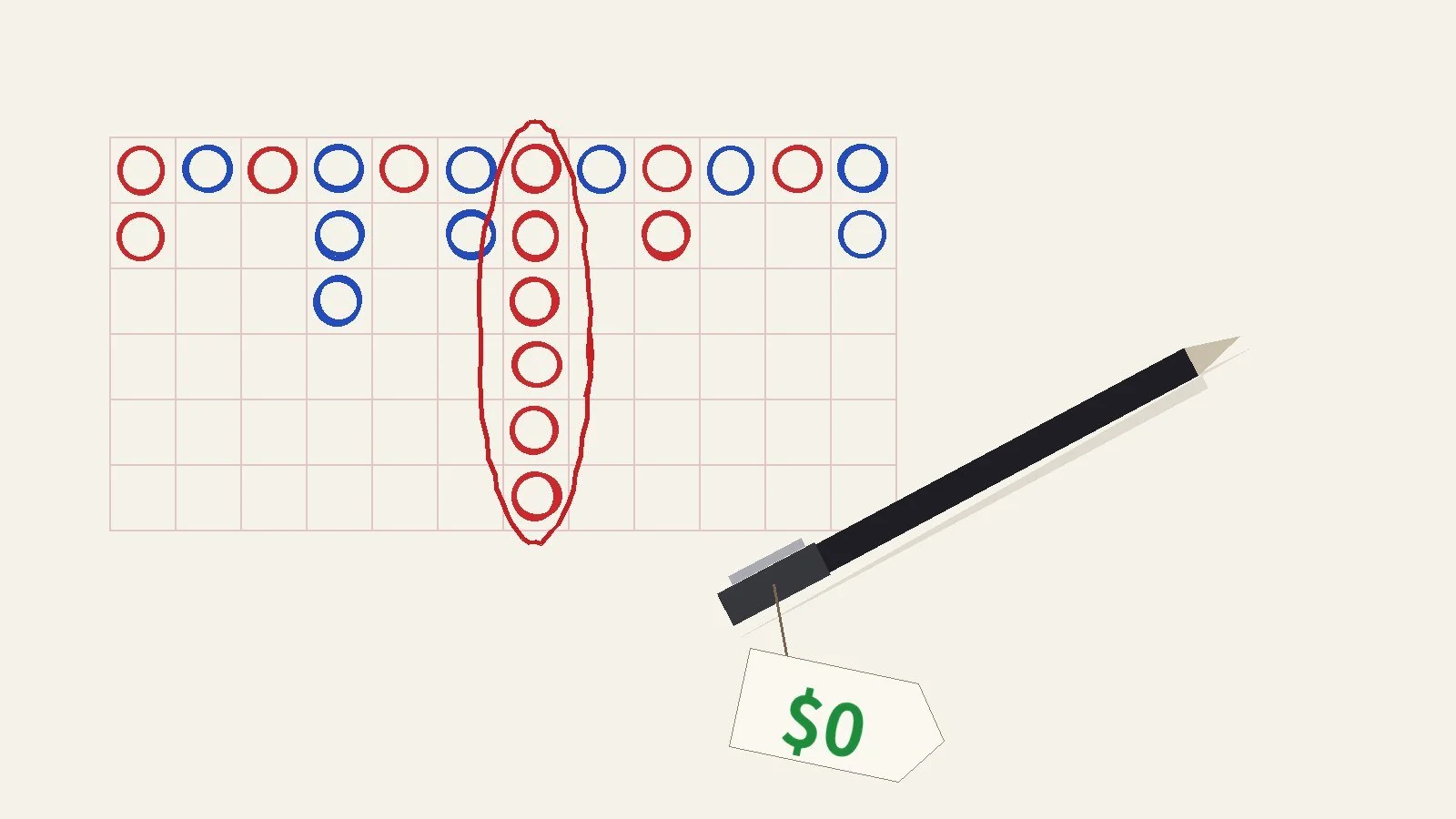
In a casino, even water costs money. So why are the pen and baccarat scorecards free? Here's what those roads really record, and one 20-card example that shows what they can't.
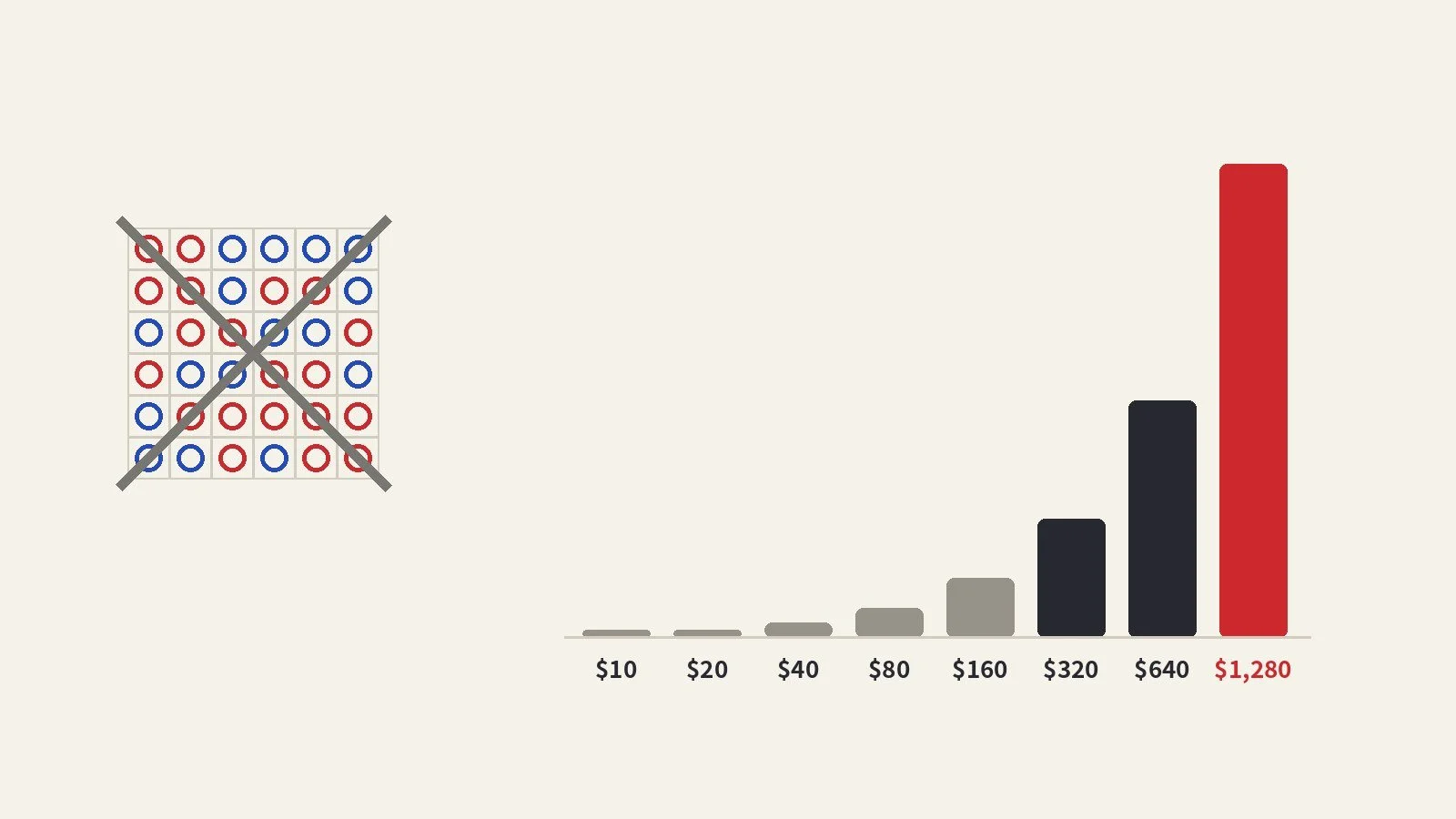
Every baccarat strategy promises an edge. The math says no betting system changes what a bet costs. Here's what the numbers do show, with the Martingale math worked out.
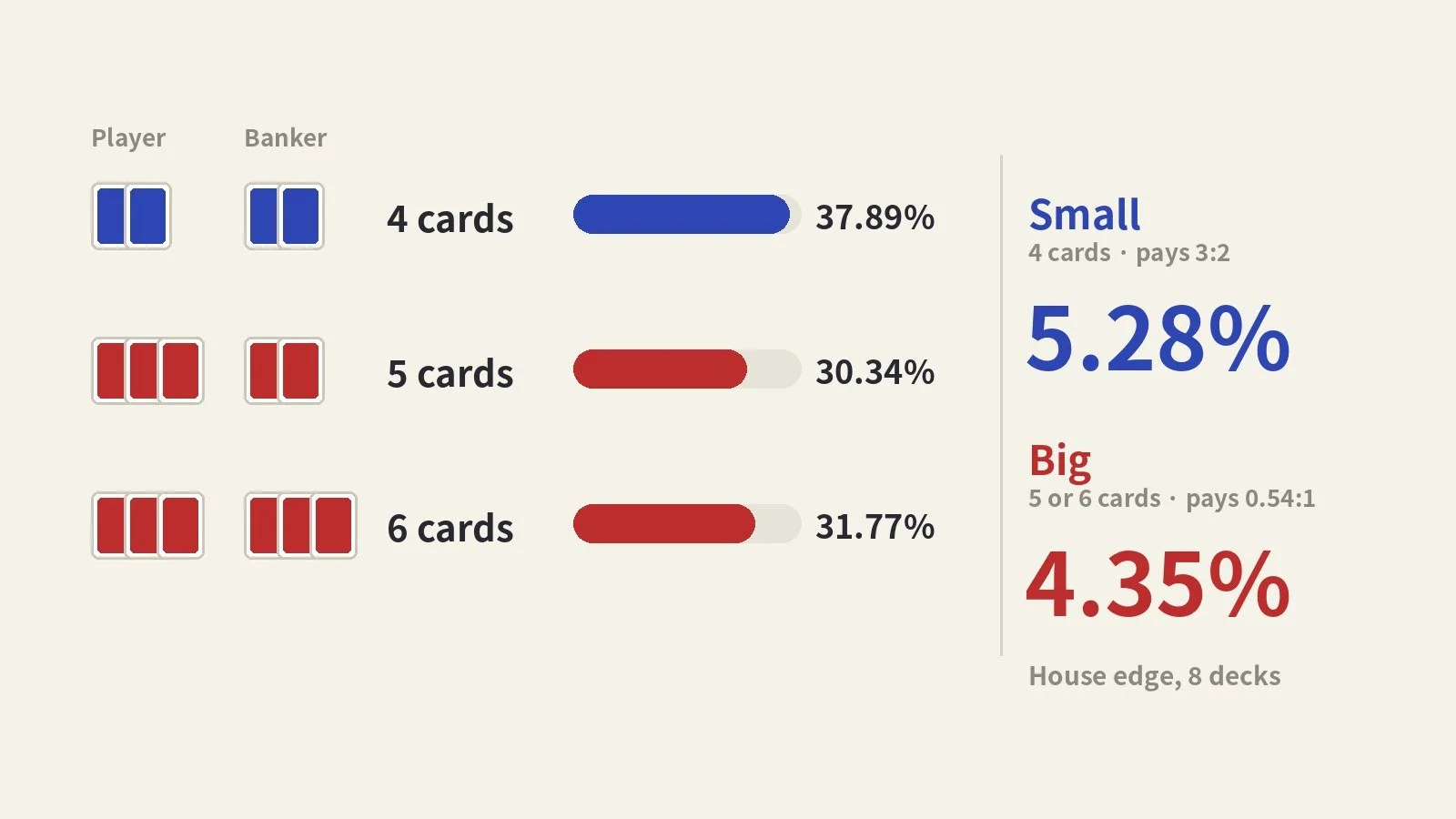
Big and Small don't care who wins. They only count how many cards the hand uses. Here is how often a hand ends on 4, 5 or 6 cards, the house edge of each bet, and how the split 4-5-6 version changes the price.
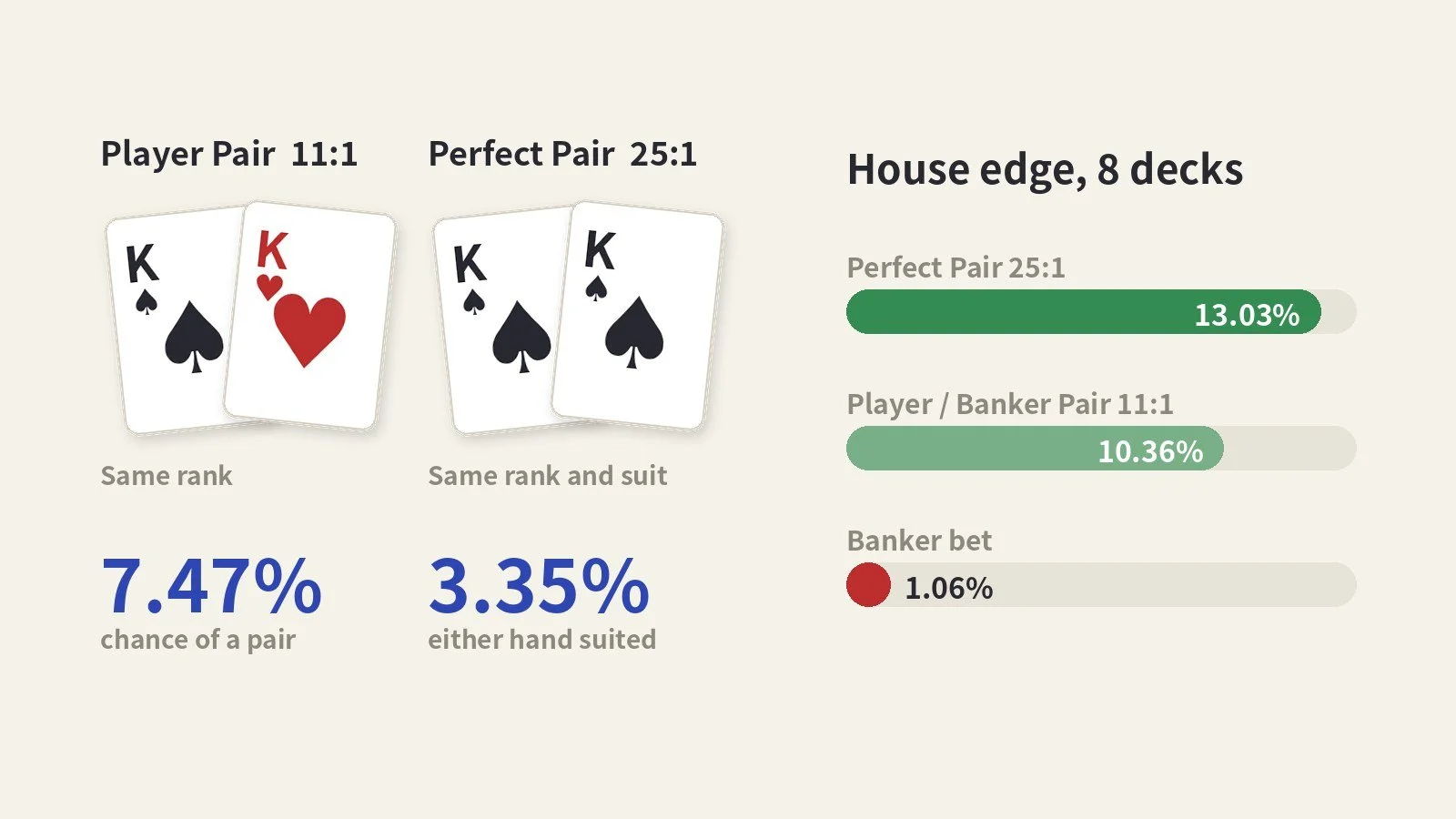
Player Pair and Banker Pair pay 11:1 but hit only 7.47% of the time, a 10.36% house edge on eight decks. Here is the full math for the pair payout, the Perfect Pair, deck count, and why pairs seem to bunch up late in the shoe.
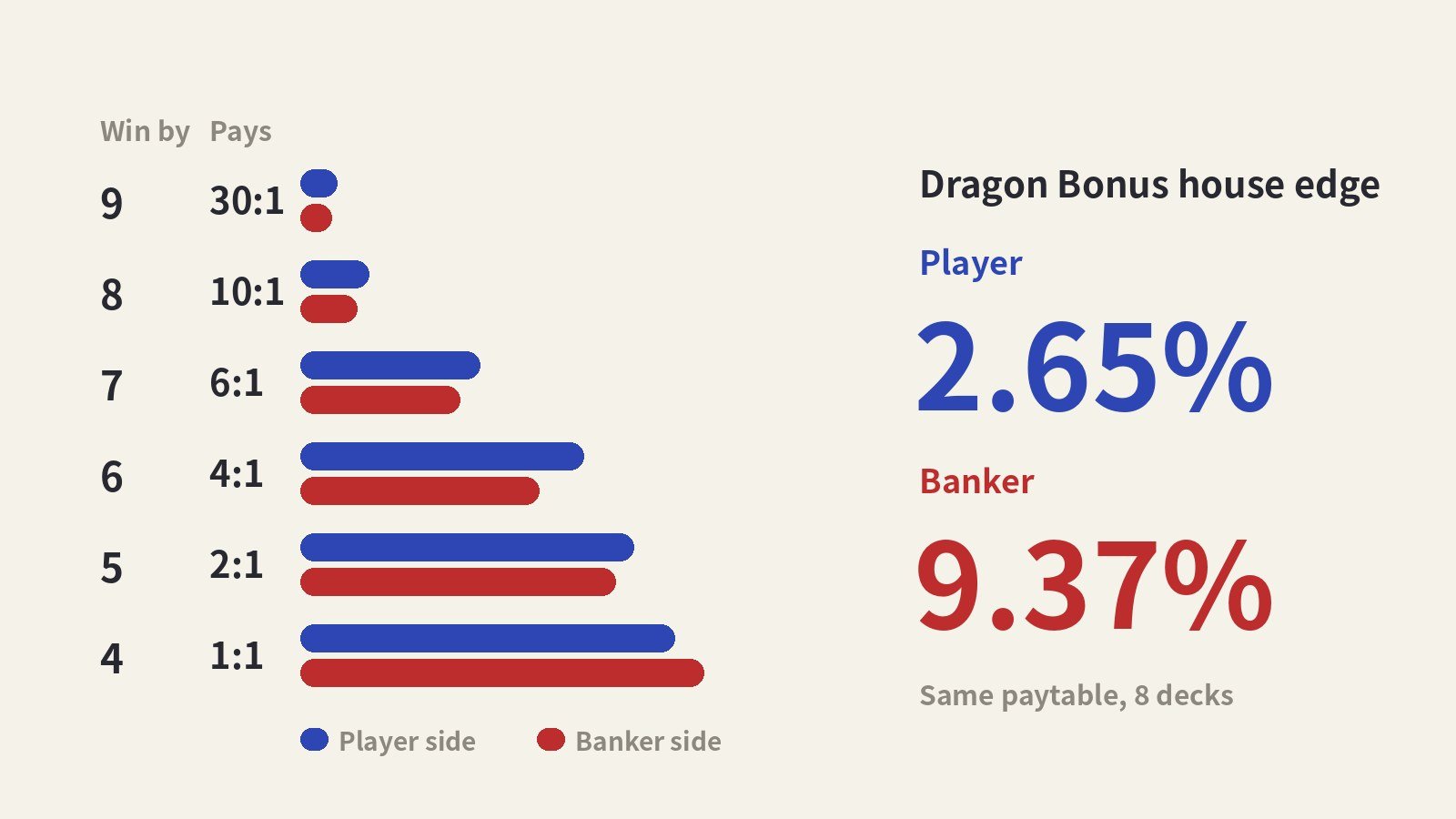
The Dragon Bonus pays by margin of victory, up to 30:1 for a 9-point win. Same paytable, two very different prices: 2.65% on Player, 9.37% on Banker. Here is every row of the math and the drawing-rule reason behind the gap.
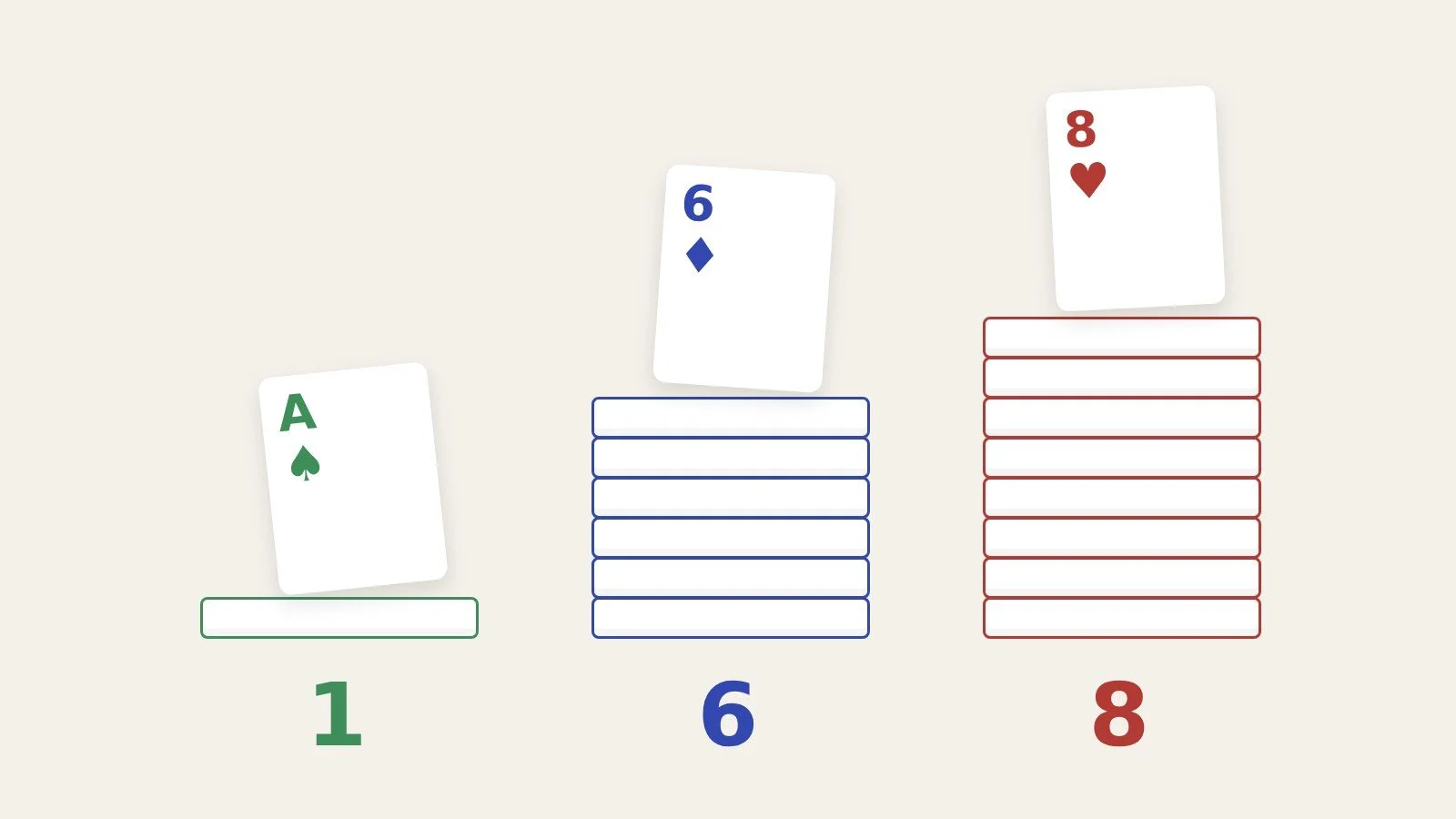
The Player's first card is a 7. What are the odds the second one is a 7 too? With one deck it's 3/51. With eight it's 31/415. That small gap nearly triples the pair bet's house edge.
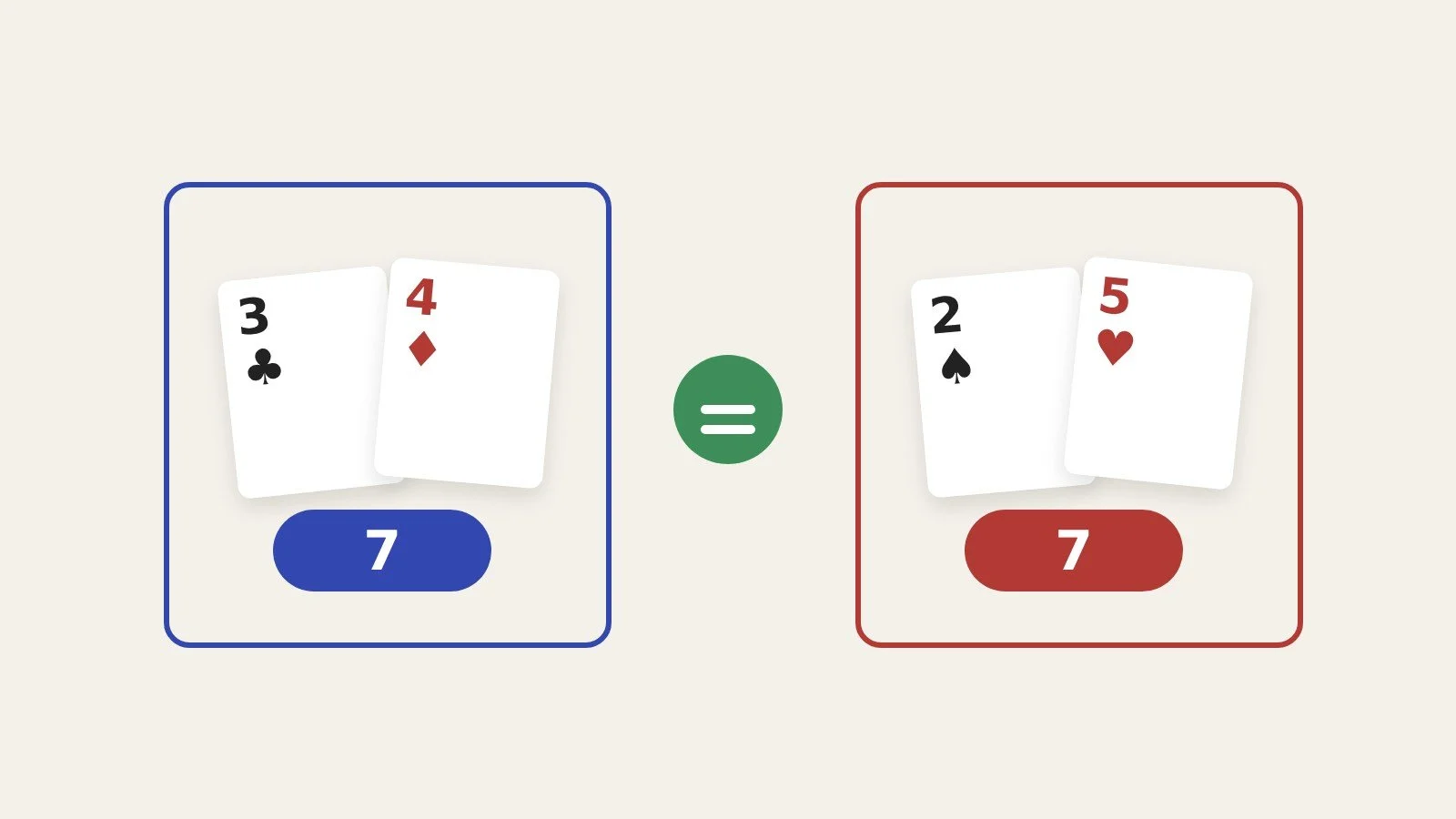
The tie pays 8 to 1, but it only lands about once every 10.5 hands. Here's the full baccarat tie odds math, what a 9 to 1 table changes, and why long tie droughts are normal.
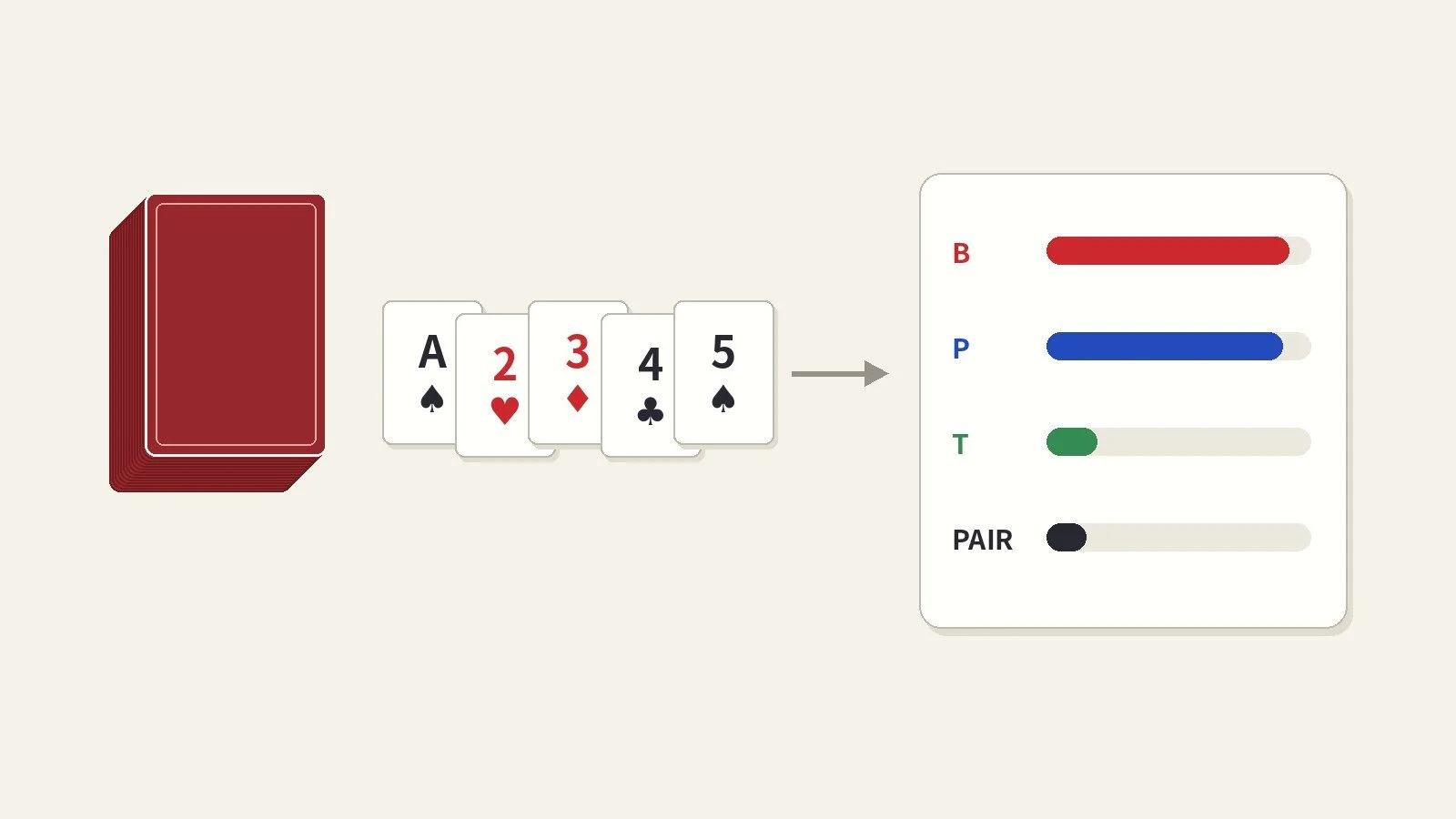
Fresh-shoe baccarat odds are only exact for the first hand. Here's how a probability calculator updates them from the cards that are left, with the numbers worked out for 20 dealt cards.
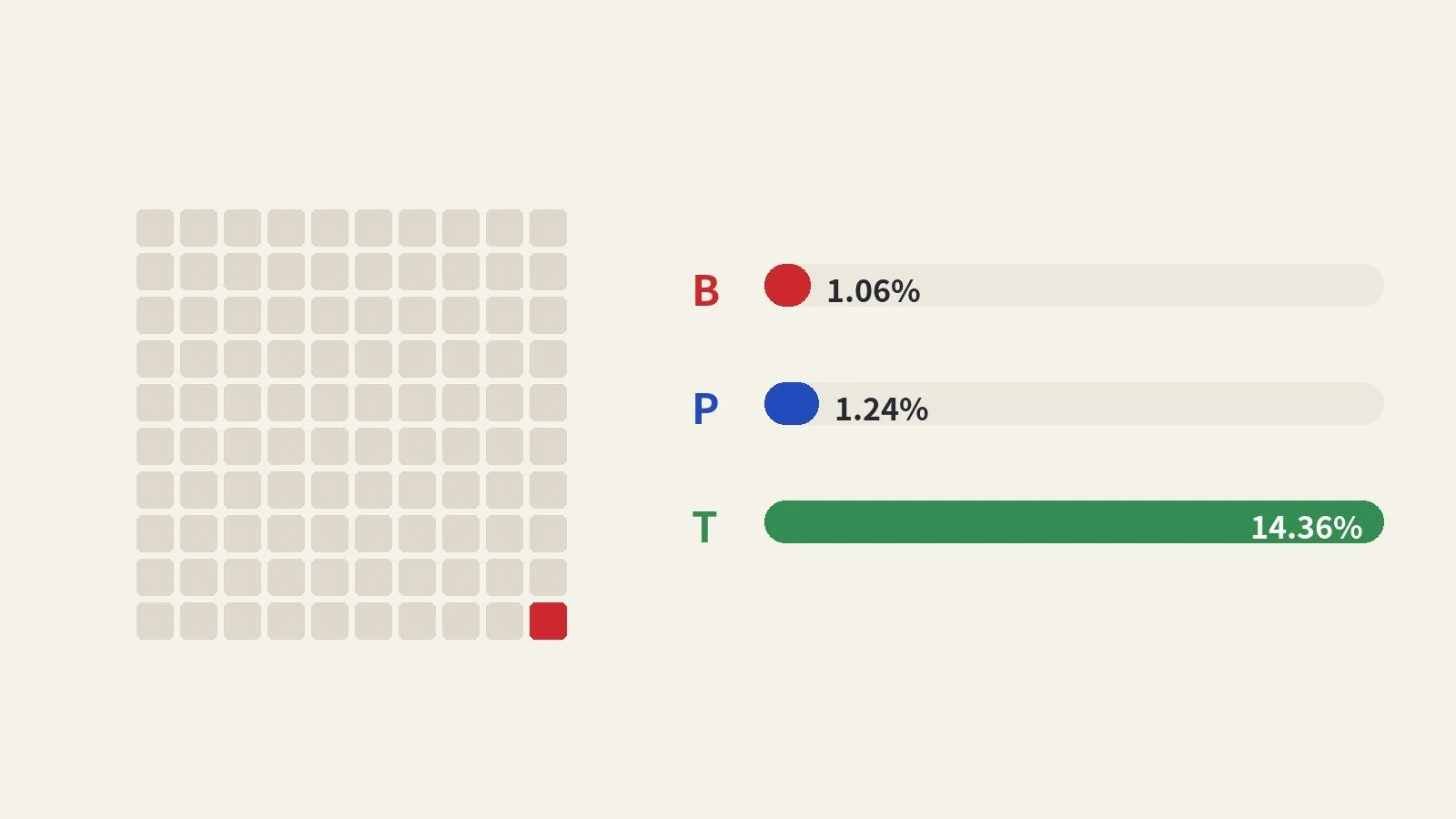
Banker 1.06%, Player 1.24%, Tie 14.36%. Here is exactly where those three numbers come from, why the Banker bet carries a 5% commission, how baccarat compares with other casino games, and what the house edge adds up to over an evening.
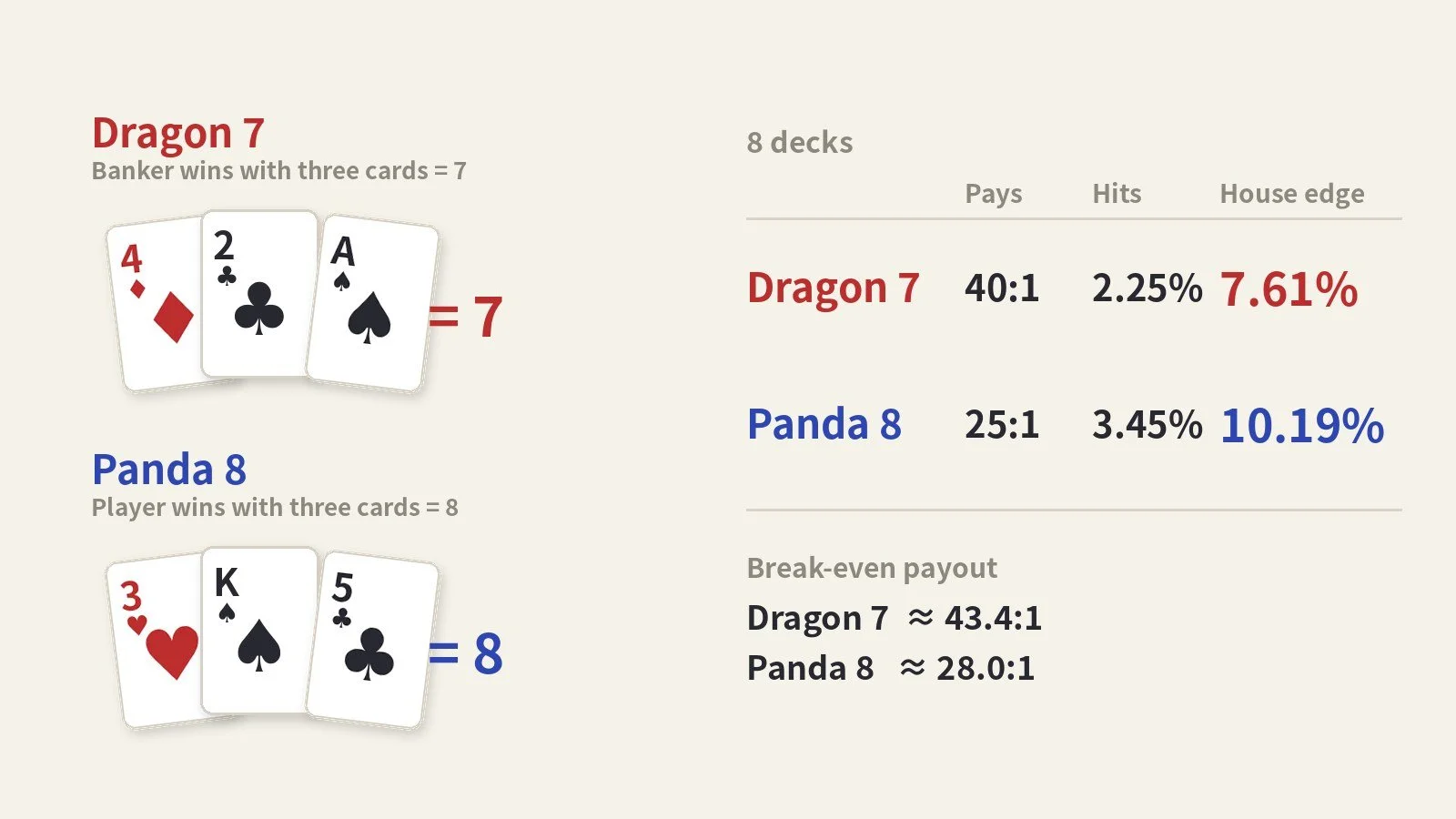
Dragon 7 and Panda 8 are the two side bets built into EZ Baccarat. Here is how often each one hits, what a fair payout would be, the house edge of each, and how the no-commission rule they come from works.
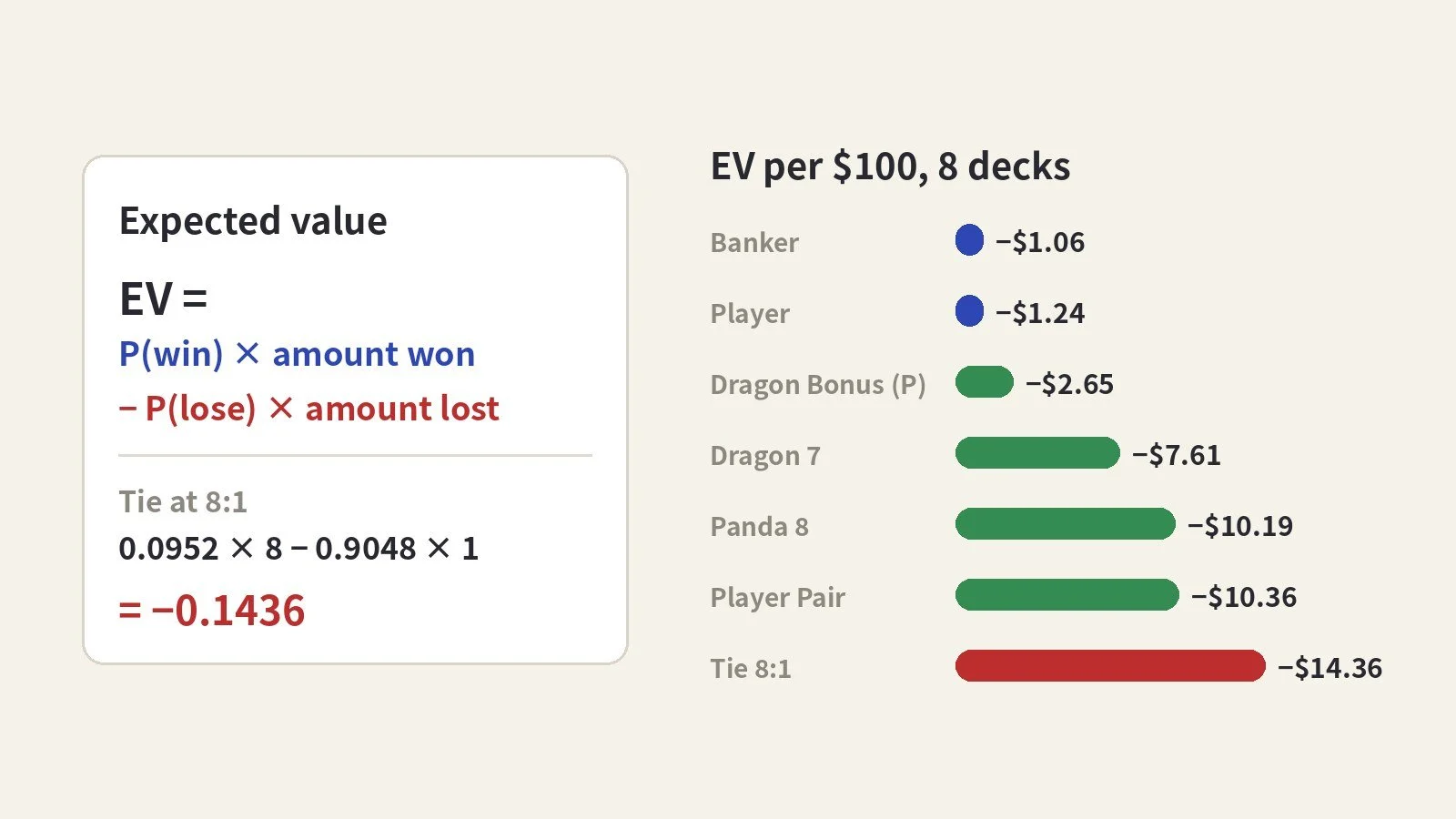
Expected value turns a payout like 40:1 into a price per $100. Here is how to calculate it, the EV of every main bet and the common side bets, and why EV alone does not tell you how bumpy a session will be.
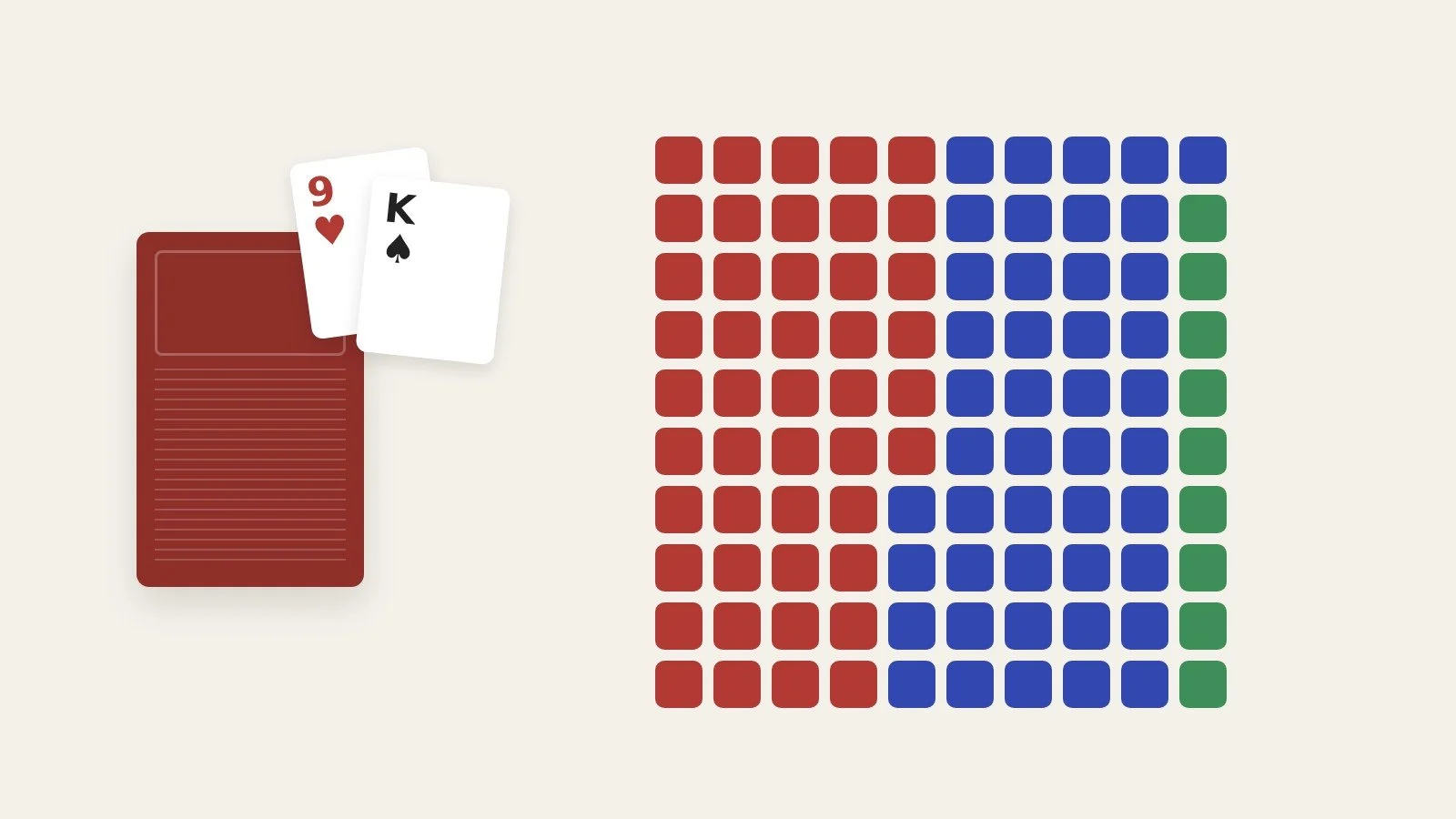
Banker 45.86%, Player 44.62%, Tie 9.52%. The exact baccarat odds for an eight-deck game, what the commission really costs, and why a long losing streak is more common than it feels.
English
Player's rule fits in one line. Banker's needs a whole table. Here's the full baccarat third card chart, plus exact numbers on how that table gives Banker its edge.